
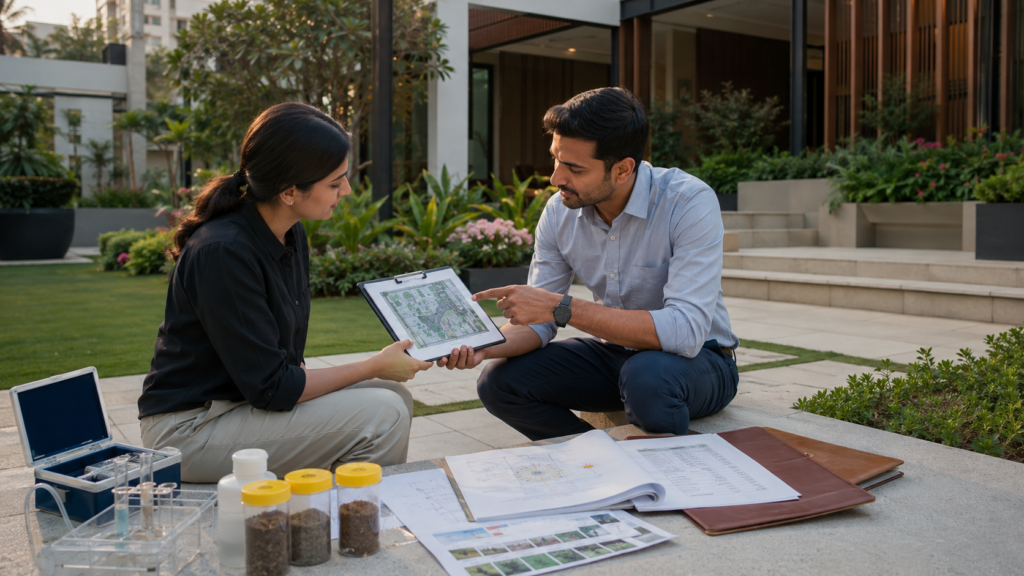
Detailed soil and water analysis report, orientation checks, and budget planning guides.
Every landscaping project, no matter its size, starts from the same place — an honest look at the actual site rather than assumptions about what should work. A consultation and site visit is where that groundwork happens, before any design, budget, or timeline gets set, so everything that follows is based on the property’s real conditions instead of guesswork.
What a Proper Site Visit Covers
Soil Analysis
Soil type, drainage capacity, and existing nutrient levels all affect what will actually grow well on a site and how much amendment or preparation will be needed before planting. Skipping this step means design decisions get made on assumptions that may not hold once work actually starts.
Water Analysis
Understanding water pressure, existing supply lines, and how water moves across the property after rain shapes both irrigation planning and drainage decisions later. A site with poor natural drainage or limited water pressure needs a different approach than one without those constraints.
Orientation Checks
Sun exposure through the day, prevailing wind direction, and how the property is angled relative to the house all influence where different plants and features will actually thrive versus where they’ll constantly struggle. This is usually assessed on site rather than from a survey drawing alone, since real conditions don’t always match what’s on paper.
Budget Planning
A realistic budget range comes out of understanding the site’s specific challenges — a property needing significant grading or drainage correction costs differently than one that’s largely ready to plant. Setting expectations at this stage avoids surprises once a design is already underway.
Translating Findings Into a Brief
Everything gathered during the visit — soil, water, orientation, and budget constraints — feeds directly into the design brief that guides everything after it, so the eventual design is grounded in the property’s actual conditions rather than a generic template applied regardless of site.
Why This Step Isn’t Optional
Projects that skip a proper consultation and site visit tend to run into problems mid-project — a plant that won’t grow where it was planned, a drainage issue nobody accounted for, a budget that didn’t anticipate the site’s actual condition. The time spent upfront on this step is what prevents costlier corrections later.