
Garden Lighting Solutions

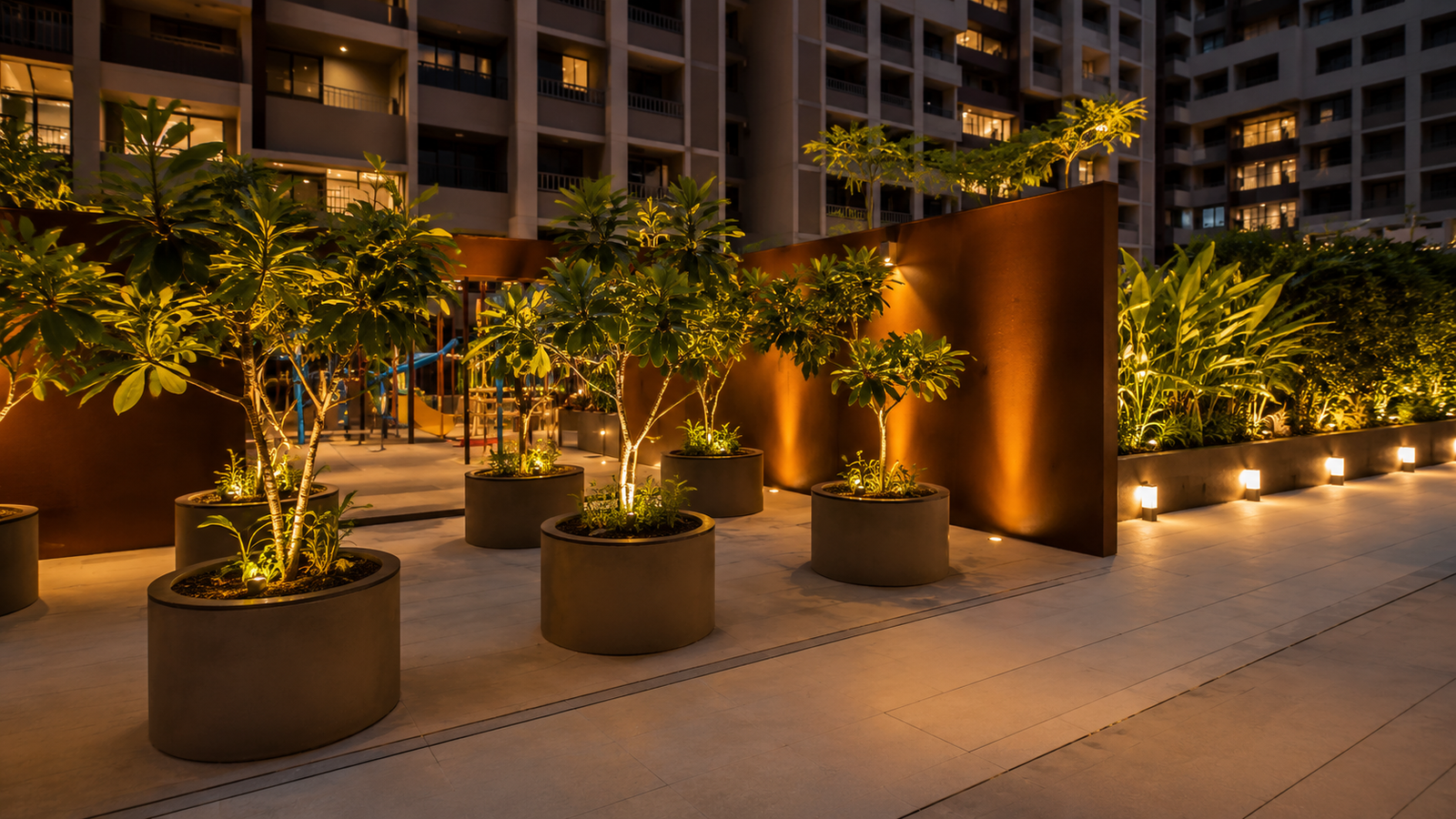
Waterproof up-lighters for tree canopies, step path illumination, and ambient pergolas lighting.

Garden lighting does two jobs at once: it makes an outdoor space usable after dark, and it changes how the landscape reads visually once the sun goes down — trees, textures, and pathways that disappear into shadow at night can become the most interesting part of the garden with the right fixtures placed in the right spots. Getting there takes more than scattering a few lights around; placement, fixture type, and how everything is wired together all matter.

Where the Details Matter

Up-Lighting Tree Canopies

Placing a waterproof up-light at the base of a tree, aimed into the canopy, throws light and shadow up through the branches instead of down onto the ground — this is usually what gives a garden its depth and atmosphere at night, far more than flat, even lighting across the whole space would.

Path & Step Illumination

Low-level fixtures along walkways and steps are there for safety first, lighting the ground where people are actually walking rather than the space around it. Spacing and brightness both matter here — too far apart and there are dark gaps, too bright and the fixtures become the focal point instead of a quiet, functional detail.

Pergola & Seating Area Lighting

Ambient lighting around a pergola or seating area is about mood as much as visibility — softer, warmer light that makes the space feel comfortable to sit in rather than the harsher, brighter light suited to a driveway or entrance.

Waterproof Fixtures & Wiring

Every fixture used outdoors has to be properly rated for exposure to rain, irrigation overspray, and temperature swings, and wiring needs to be run and connected in a way that stays protected over years of outdoor use — this is the part that doesn’t show in the finished look but determines how long the system actually lasts.

Layering Instead of Flooding

The gardens that look best at night usually aren’t the most brightly lit — they’re the ones where a few well-placed fixtures highlight specific features (a tree, a path, a wall texture) and let everything else fall into soft shadow, rather than lighting the whole space evenly and flatly.

Why Placement Beats Quantity

More fixtures don’t automatically make a better result — a handful of well-positioned lights, chosen for what they’re actually highlighting, almost always outperforms a garden lit everywhere at the same brightness. The planning stage, deciding what to highlight and what to leave in shadow, is where the real difference gets made.
Pathways, Pergolas & Hardscape Works

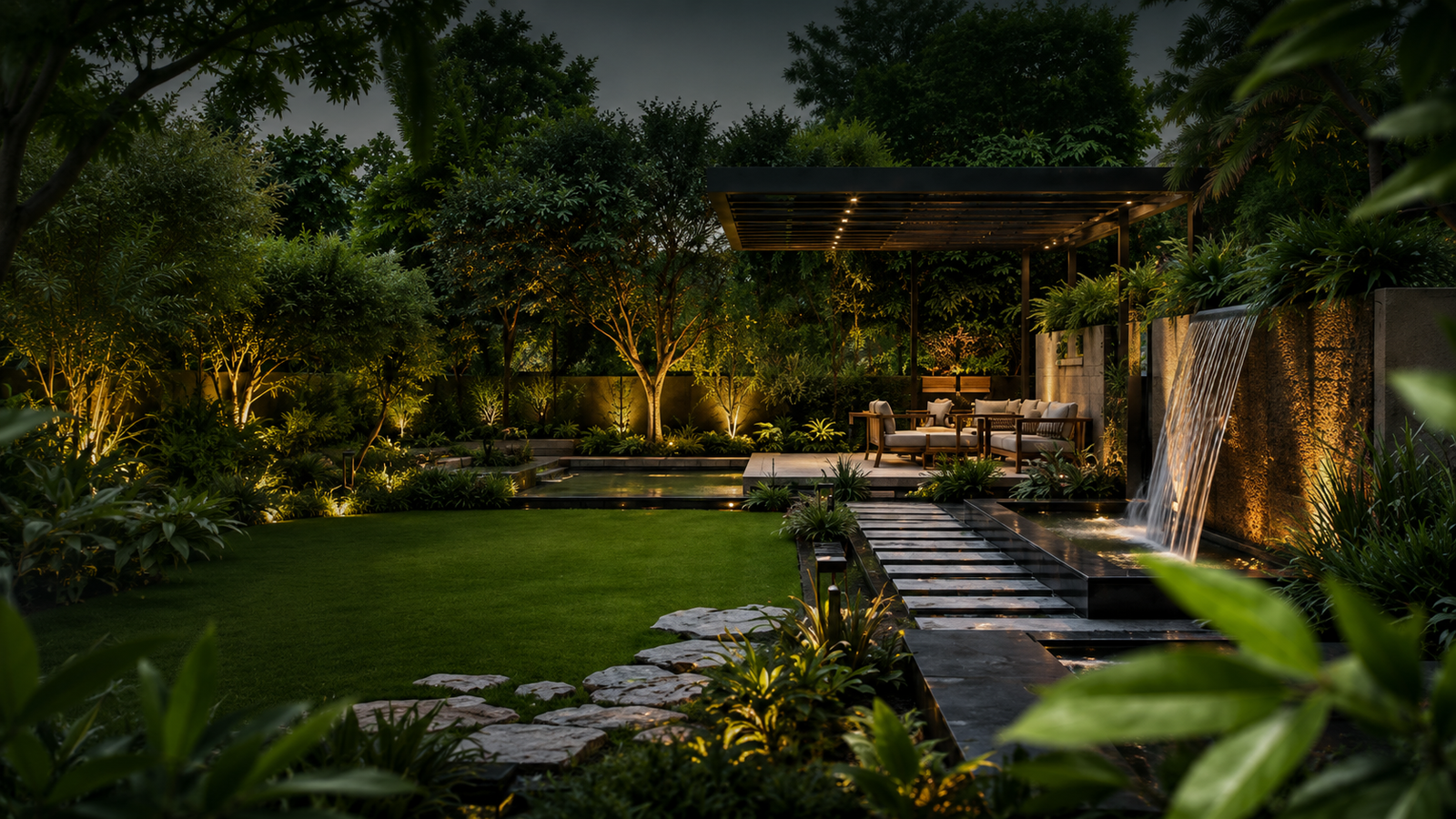
Grit walls, cobbles, stepping stones, and custom wood or steel trellis gazebos and pergolas.

Hardscape is everything in a landscape that isn’t planted — paths, pergolas, walls, and seating structures — and it’s usually what gives a garden its bones. Planting fills in and matures over time, but the hardscape is what people actually walk on, sit under, and see holding the whole layout together, so getting the materials and construction right matters as much as the design itself.

What the Work Actually Involves

Grit Walls & Retaining Structures

Where a site has a slope or a level change, retaining walls hold soil in place and create usable flat areas that wouldn’t otherwise exist. Proper drainage behind the wall matters just as much as the wall face itself — a wall built without it is prone to pressure buildup and failure over time, regardless of how solid it looks on day one.

Cobbles & Stepping Stones

Cobbles and stepping stones are used for pathways where a more informal, natural look fits the garden better than a poured or paved surface. Spacing and stability matter for stepping stones especially — set unevenly, they become a tripping hazard rather than a functional path.

Wood or Steel Trellis Pergolas

A pergola’s structure needs to be built for the load it’ll carry — climbing plants, hanging lighting, or simply its own weight over years of weather exposure. Wood and steel each bring different maintenance needs and visual character, and the choice usually comes down to the style of the rest of the property and how much upkeep the owner wants going forward.

Gazebos as Focal Points

A gazebo tends to anchor a garden visually, so its placement matters as much as its construction — sightlines from the house, relationship to planting beds, and how it’s approached from the main path all factor into where it actually belongs on the property.

Foundations Before Finishes

Every hardscape element, no matter how simple it looks on the surface, depends on proper base preparation — compacted subgrade, correct drainage falls, and adequate footings for anything load-bearing. This is the part that’s invisible once finished, but it’s what determines whether the structure stays solid for years or starts shifting and cracking within one wet season.

Why It’s Worth Getting Right the First Time

Hardscape is expensive and disruptive to redo — unlike a struggling plant that can simply be replaced, a wall or path built without proper foundations usually means tearing out and starting over. Investing in correct base work and materials upfront is what keeps these structures functional and good-looking for decades instead of a few seasons.