
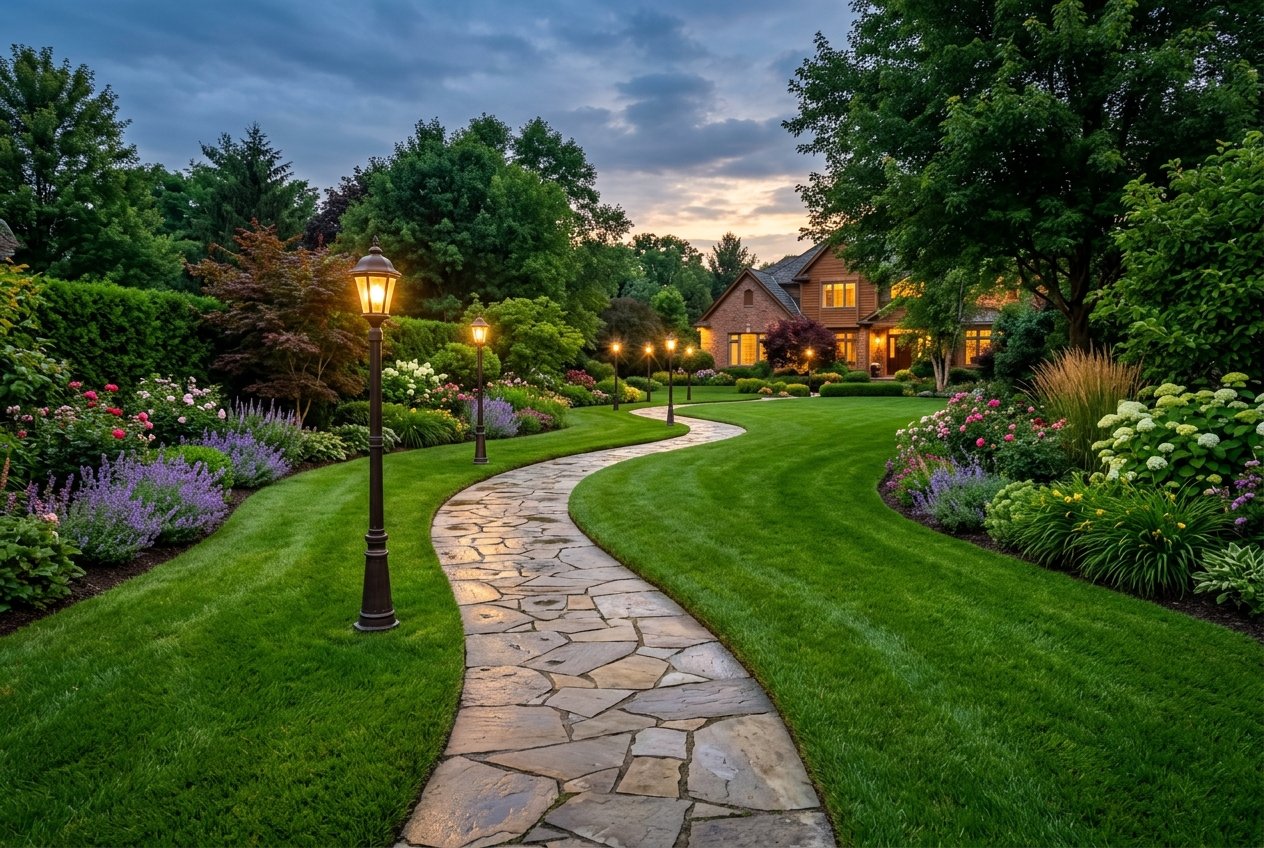
Landscape Execution & Development

Seamless on-site implementation, earth grading, planting, and civil-landscape coordination.

A design on paper is only as good as the execution that follows it. Landscape execution and development is the on-site phase — grading, planting, and building — where a plan either gets translated faithfully into a finished space or drifts from what was intended because of poor sequencing, coordination, or site management along the way.

What Happens On Site

Earth Grading

Before anything is planted or built, the site’s grading is set to establish correct slopes for drainage and the finished levels the design calls for. Grading mistakes at this stage tend to surface later as drainage problems that are far more disruptive to fix once planting and hardscape are already in place.

Planting Execution

Translating a planting plan into the ground involves more than placing species where a drawing shows them — spacing, planting depth, and sequencing (larger structural plants before understory and ground cover) all affect how well the finished planting matches what was actually designed.

Civil-Landscape Coordination

Larger projects often involve other trades working on the same site — plumbing, electrical, structural work — and landscape execution has to coordinate around them so utilities, irrigation lines, and hardscape footings don’t conflict with each other underground or get built in the wrong sequence.

Sequencing the Build

Work generally proceeds from the ground up and from structural to finishing: grading and drainage first, then hardscape and any built structures, then planting last, since planting into a still-changing site tends to mean plants get damaged or disturbed by the work happening around them afterward.

On-Site Adjustments

Real sites rarely match survey drawings perfectly — an unexpected utility line, a drainage issue only visible once digging starts, or a mature tree root system can all require adjusting the plan on site. Good execution means solving these problems without losing the intent of the original design.

Why Execution Is Where Projects Actually Succeed or Fail

A strong design can still produce a disappointing result if execution is rushed, poorly sequenced, or uncoordinated between trades — and conversely, careful execution can make even a modest design feel considered and well-built. The on-site phase is where the plan either becomes real or falls short of it.
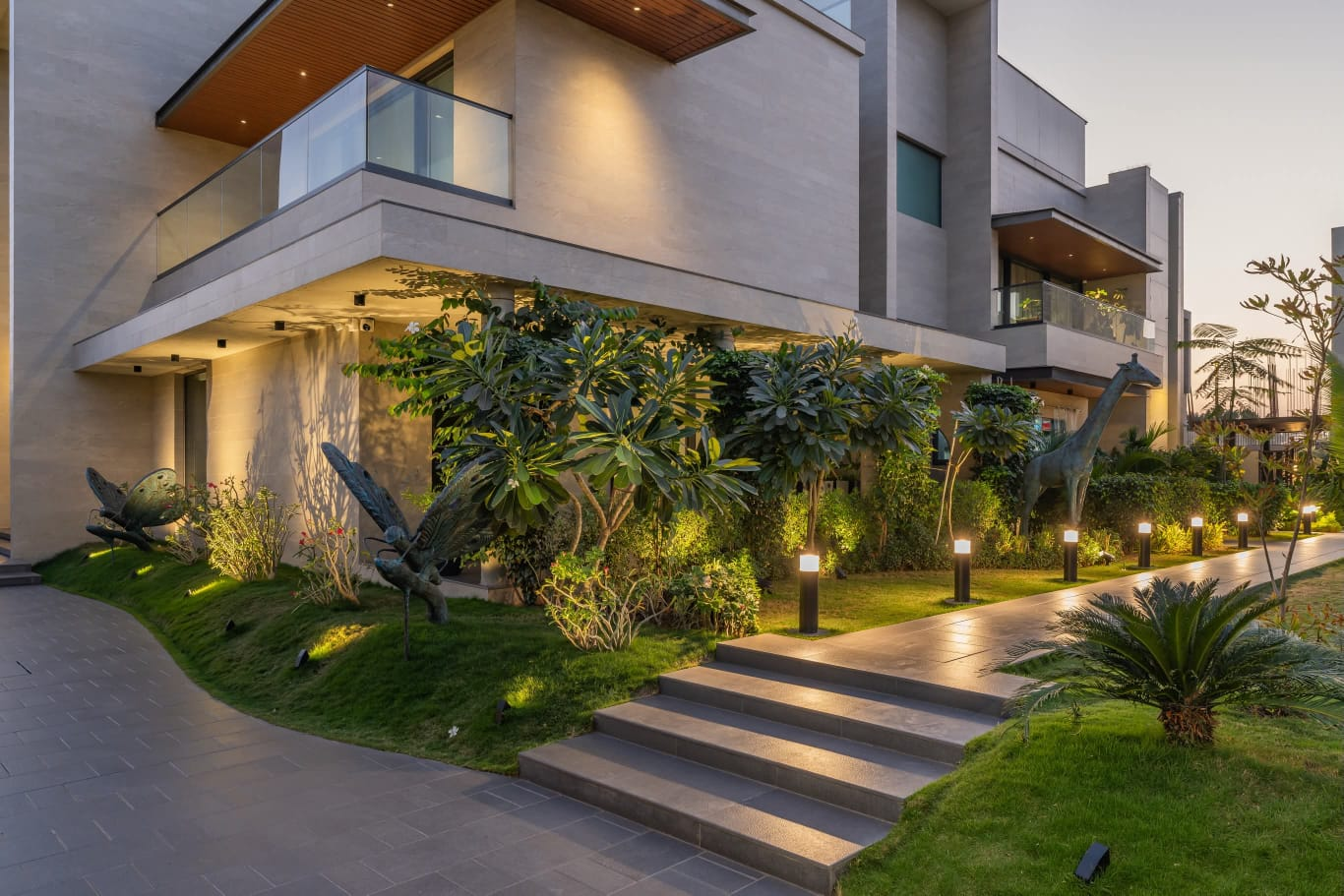
Luxury Villa & Farmhouse Landscaping

Grand scale landscape design, featuring swimming pool decks, gazebos, and exotic gardens.

Landscaping a villa or farmhouse property comes with a different set of demands than a typical residential garden — larger scale, more varied use (leisure, entertaining, sometimes working land), and often a greater expectation of visual impact throughout the year. Getting it right means designing at that scale from the start rather than simply stretching a smaller garden’s approach across more land.

What Sets This Scale of Project Apart

Swimming Pool Decks

A pool deck at this scale has to work as both a functional surface — non-slip, heat-tolerant, durable against constant water exposure — and a visual centerpiece the rest of the landscape is often organized around. Material choice and how the deck transitions into surrounding planting or lawn both matter as much as the pool itself.

Gazebos & Outdoor Structures

Larger properties often support multiple destination points rather than a single seating area — a gazebo near the pool, a separate shaded structure elsewhere on the grounds — which means the landscape design needs to account for sightlines and movement between several focal points, not just one.

Exotic Garden Sections

Villa and farmhouse landscapes frequently include statement planting areas built around specimen or exotic species, which take more planning around microclimate and long-term maintenance than standard garden beds, but deliver a level of visual impact that fits the scale of the property.

Managing Scale

Designing for several acres rather than a typical residential plot changes how everything from irrigation zoning to sightlines to maintenance planning has to be approached — a layout that works at a smaller scale often reads as sparse or disconnected when simply enlarged, so the design has to be built for the larger footprint from the outset.

Balancing Formal and Natural Areas

These properties often mix more manicured, formal zones near the house with looser, more naturalistic planting further out — a balance that has to be planned deliberately so the transition between the two feels intentional rather than like two unrelated gardens stitched together.

Why Scale Changes the Approach

A villa or farmhouse landscape isn’t just a larger version of a standard garden — the increased scale changes how focal points, transitions, and maintenance all have to be planned. Treating it as a bigger version of a small-garden plan usually leaves it feeling underdesigned for the space it actually occupies.

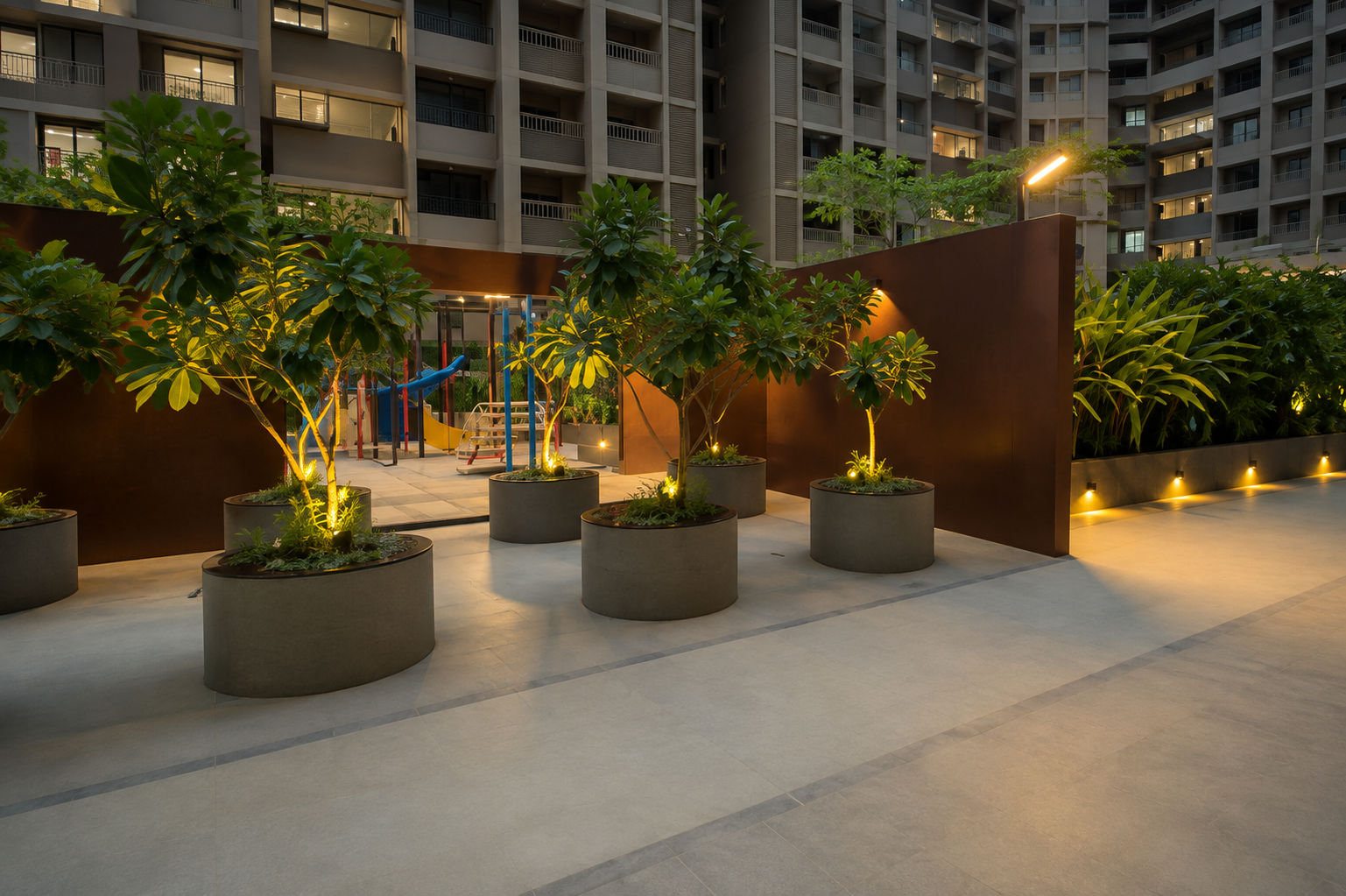
Residential & Commercial Landscaping

Green masterplanning for housing estates, hotels, tech parks, and corporate offices.

Residential and commercial landscaping share the same underlying craft — planting, grading, hardscape — but the priorities behind each are different enough that a plan built for one rarely transfers well to the other. A homeowner’s garden is designed around personal use and preference; a housing estate, hotel, or corporate office is designed around consistency, durability, and how large numbers of people move through and experience the space every day.

What Changes at This Scale

Master Planning for Estates

Housing estates and larger residential developments need a landscape plan that stays coherent across many individual plots and shared areas — common green spaces, entry statements, and streetscape planting all have to work as one connected design rather than as unrelated pieces next to each other.

Hospitality Grounds

Hotel landscaping has to hold up to a different kind of use than a private garden — constant foot traffic, high visual expectations from guests, and grounds that need to look consistently presentable year-round rather than accommodating an owner’s personal seasonal preferences.

Tech Parks & Corporate Campuses

Office and campus landscaping typically balances two goals at once — grounds attractive enough to reflect well on the business, and outdoor areas that actually get used by employees for breaks or informal meetings, rather than purely decorative space that sits empty.

Durability & Low-Maintenance Priorities

Commercial and estate-scale planting generally leans toward hardier, lower-maintenance species and materials, since the cost and logistics of maintaining a high number of high-input plants across a large shared space adds up quickly compared to a single residential garden.

Consistency Across a Site

Whether it’s a housing estate or a corporate campus, matching plant palettes, hardscape materials, and signage-adjacent greenery across the whole property is what gives it a cohesive, intentional feel — inconsistency between sections tends to read as unplanned even when each individual area looks fine on its own.

Why the Same Skillset Needs a Different Approach

The technical work — grading, planting, irrigation, hardscape — carries over between residential and commercial projects, but the priorities driving the design don’t. A commercial or estate-scale project succeeds by being coherent, durable, and low-maintenance at scale, where a residential garden succeeds by fitting one household’s specific way of living in the space.