
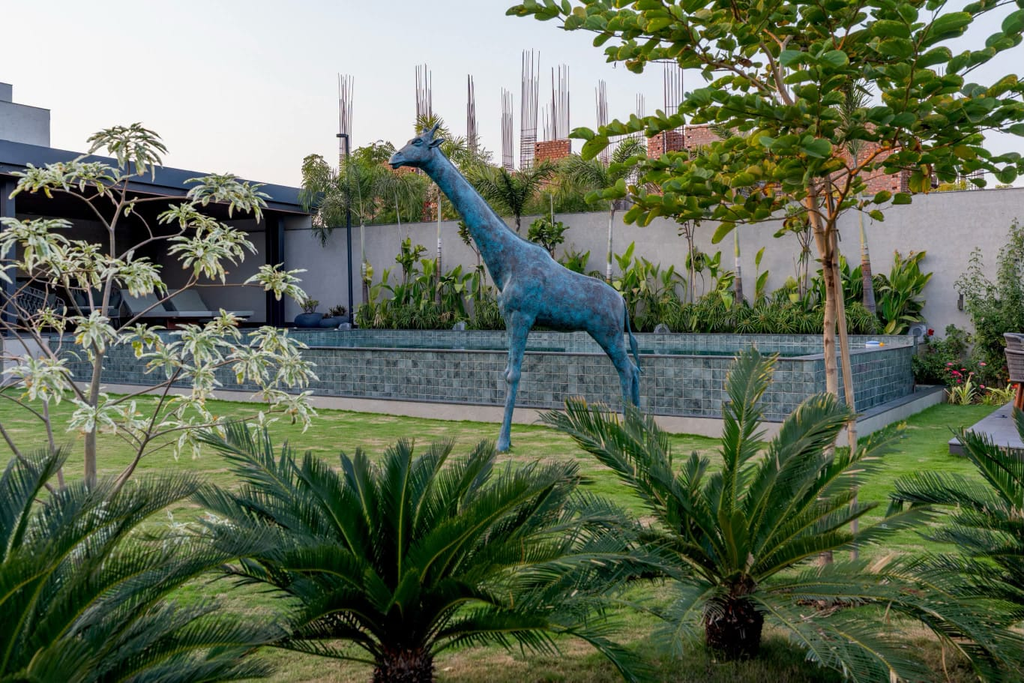
Deep earth boring, staking, soil aeration, and avenue lining with mature shade trees.
Tree plantation and avenue plantation cover two related but distinct jobs: planting individual trees where a property needs shade, screening, or a focal point, and lining an entrance road or driveway with a matched row of trees for a consistent, finished look as they mature. Both depend on getting the planting itself right — because a tree that’s planted poorly rarely recovers, no matter how good the species choice was.
What Goes Into It
Species Selection
The right tree for a spot depends on mature height and canopy spread, root behavior near paving or foundations, climate tolerance, and how much maintenance the owner actually wants long-term. A fast-growing species that outgrows its space in five years usually costs more to remove later than it would have cost to choose correctly at the start.
Deep Earth Boring & Pit Preparation
Each planting pit needs to be dug wide and deep enough for the root ball, with compacted or poor-draining soil broken up so roots aren’t confined to a small pocket. Rushing this step is one of the more common reasons newly planted trees fail in their first year or two.
Staking & Support
Young trees, especially larger nursery stock, need staking to stay upright and properly anchored while their root systems establish. Stakes and ties have to be checked and adjusted over time — left too tight or too long, they can damage the trunk instead of protecting it.
Soil Aeration & Backfill
The soil used to backfill around the root ball affects how quickly roots spread outward. Properly aerated, amended backfill gives roots less resistance to grow into, which shows up later as faster, healthier establishment.
Avenue Lining
For avenue plantation specifically, spacing and alignment matter as much as the trees themselves — consistent spacing along the full length of a driveway or road gives the avenue its finished look once the trees mature, while uneven spacing is hard to correct after the fact without replanting.
Why Establishment Matters More Than Planting Day
A tree’s first one to two years in the ground determine most of its long-term health. Watering schedules, mulching to retain soil moisture, and periodic checks on staking and pest activity during that window matter more than almost anything done on planting day itself — which is why ongoing aftercare is treated as part of the job, not an optional extra.