
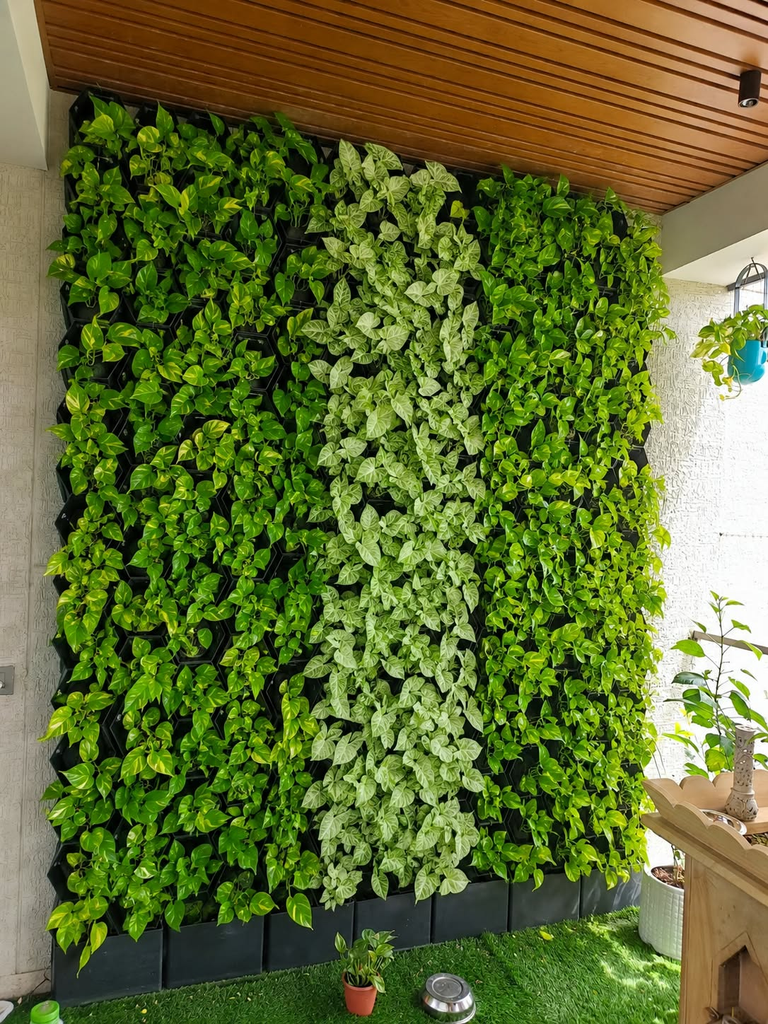
High-density automated vertical planting solutions for insulation and luxury wall aesthetics.
A vertical green wall packs a meaningful amount of planting into a footprint that would otherwise hold none at all — turning a bare wall into a living surface. Unlike a planting bed, though, every plant on a vertical wall depends entirely on a built system to deliver water and nutrients, which makes the engineering behind it just as important as the planting design itself.
What Makes a Green Wall Work Long-Term
High-Density Planting Layout
Vertical walls typically use a modular panel or pocket system that holds many individual plants close together, arranged so their combined foliage reads as a continuous living surface rather than a grid of separate pots. Getting the plant spacing and species mix right at this density is what determines whether the wall looks lush or patchy once established.
Automated Irrigation
Because a vertical wall has no soil reservoir to speak of, plants dry out far faster than they would at ground level, so a reliable automated drip or misting system built into the wall structure isn’t optional — it’s what keeps every plant on the wall watered evenly regardless of position or height.
Structural Support & Waterproofing
The wall behind the installation needs to be protected from moisture just as much as a rooftop deck does, since a green wall sits directly against a building surface for its entire life. A proper backing layer and drainage path prevent water from reaching the wall itself while still keeping the planting adequately irrigated.
Species Selection for Vertical Growth
Not every plant tolerates being grown sideways or upside-down relative to how it naturally grows — species are chosen specifically for their tolerance of vertical orientation, consistent moisture, and the light conditions the wall’s location actually receives, whether that’s full sun, shade, or an indoor setting.
Insulation & Aesthetic Value
Beyond the visual impact, a well-established green wall can help moderate surface temperature on the wall behind it, adding a degree of thermal insulation alongside its role as a design feature — a practical benefit that comes on top of the look it creates.
Why Maintenance Access Matters From the Start
A green wall that looks impressive on installation day still needs ongoing access for pruning, replacing individual plants, and servicing the irrigation system — designing that access in from the beginning is what keeps a wall looking consistently good for years, rather than declining once it’s harder to reach and maintain properly.